The Gondola Erases the Commute. It Doesn't Erase the Price Gap.
September 3, 2026
September 3, 2026
In May 2026, exactly one home sold in the Town of Telluride. That single closing was enough to push the town's reported median sale price up 27 percent year over year and shrink the average time on market from 140 days to three. Read as a trend line, that looks like a market on fire. Read as what it actually is, a sample size of one, it says almost nothing about where prices are heading. Anyone leaning on a national portal to compare Telluride against Mountain Village this year should treat swings like that as noise, not signal.
That correction matters because the two towns get compared constantly, and for good reason. They sit eight miles apart by road, linked by a free public gondola that covers the distance in about twelve minutes, and buyers routinely ask which side holds value better. But the number worth studying isn't the one bouncing around on a single closed sale. It's the price-per-square-foot gap between the two towns that has survived the gondola entirely.
The Telluride-Mountain Village gondola opened on November 19, 1996, and it remains the only free public transportation system of its kind in the country. It runs on wind power purchased from San Miguel Power Association, carries roughly 3.11 million rider trips a year through four stations, and connects Telluride, San Sophia, Mountain Village Center, and Market Plaza. It wasn't built as a novelty. It was built so the two towns could function as one economy rather than two, and Mountain Village's own economic development office has said as much when extending the line's operating season, framing longer gondola hours as a direct way to build a more year-round economy across both towns.
If physical separation were what buyers were actually pricing when they choose between Telluride and Mountain Village, a free twelve-minute connector should have closed that gap by now. It hasn't.
Current local benchmarks put single-family homes in the Town of Telluride at roughly $2,115 per square foot, against about $1,510 per square foot in Mountain Village. Condominiums show the same pattern: around $2,015 per square foot in town versus $1,320 in the Village. That's a gap of roughly $600 to $700 a square foot that persists no matter how fast the gondola runs.
| Town of Telluride | Mountain Village | |
|---|---|---|
| Single-family, price per sq ft | ~$2,115 | ~$1,510 |
| Condominiums, price per sq ft | ~$2,015 | ~$1,320 |
What that difference actually buys is two different products, not two tiers of the same one. In town, buyers are paying for Victorian-era character, walkability, and a lot count fixed by a historic district that cannot expand. In Mountain Village, buyers are paying less per square foot for true ski-in/ski-out access on runs like Double Cabins and Bridges, fairway frontage on the Telluride Golf Club, and newer construction on larger parcels.
The mechanism isn't convenience. It's land. Telluride sits in a narrow box canyon hemmed in by public land, so its supply of buildable lots is essentially fixed. Mountain Village was built as a purpose-designed resort community on a mesa with room to keep adding inventory. Buyers comparing the two towns aren't pricing a commute anymore. They're pricing which kind of scarcity they want to own: a town that can never build more, or a village that still can, for now.
That last qualifier matters, because Mountain Village's buildable land is starting to run out too. Two branded developments in the pipeline, the Four Seasons Residences and Highline, together represent more than $300 million in future luxury inventory. Highline is slated to complete in 2026. The Four Seasons Residences, expected in 2027, are projected to price at close to $4,000 per square foot, more than double the Village's current average and well above even the Town of Telluride's current benchmark. A Six Senses project is slated to follow in 2028.
None of these presales show up in monthly MLS statistics until units actually close. But once even a handful of Four Seasons units transact, they will pull Mountain Village's average price per square foot sharply upward, and every existing resale in the Village will get remeasured against that new ceiling. The $600 gap that currently separates the two towns isn't a settled ranking. It's a snapshot sitting between two supply shocks, one that has already happened in the Town of Telluride's fixed lot count, and one that's about to happen in Mountain Village's pipeline.
The broader market context makes the timing more interesting, not less. Across both towns combined, local MLS figures show 31 properties closing through the first quarter of 2026, an 11 percent increase over the 28 recorded in the same period of 2025, which pushed total dollar volume up 18 percent to roughly $126 million. But the median sale price told a different story over that same stretch, falling 26 percent to $2,350,000 from $3,162,500 a year earlier, while median list price slipped 10 percent to $2,875,000. The sale-to-list ratio eased from 97 to 93 percent, and homes that did sell took nearly twice as long, a median of 202 days compared with 102 the year before.
By the end of May 2026, combined active listings across both towns sat at roughly 90, with a median 291 days on market and a median sale price of $3,175,000, averaging about $1,934 per square foot. In most metro markets, that days-on-market figure alone would read as a clear buyer's advantage.
It isn't quite that simple here. This is a market defined by scarcity, not distress. Sellers in Telluride and Mountain Village are rarely forced to sell, so a long time on market usually reflects aspirational pricing rather than desperation. Buyers get real room to negotiate on listings that have sat for months. But a fairly priced property with something genuinely hard to replace, a true ski-in/ski-out condo or a fully entitled in-town lot, still moves fast, because the buyers who want it have nowhere else to go. Waiting for the whole market to soften evenly misreads the mechanism. The softening shows up in sitting inventory. It doesn't show up in the handful of listings actually worth competing for.
One more detail worth confirming before comparing any two specific listings: both towns and San Miguel County maintain deed-restricted and workforce housing programs that sit outside the market-rate pool. They don't change the per-square-foot math above, but they do shrink the pool of comparable properties a buyer is actually choosing among, so it's worth checking a listing's status before treating its price as a clean comp.
Does the fall gondola closure affect touring homes in Mountain Village right now? Yes. The gondola is scheduled to run through October 25, 2026, close for annual maintenance from October 26 through November 19, and reopen for winter service on November 20. San Miguel Authority for Regional Transportation buses cover the route during the closure, so anyone touring properties in Mountain Village this fall should build that bus schedule into showing days rather than assuming the gondola will be running.
Is Mountain Village the better investment simply because it's cheaper per square foot? Not necessarily. The lower price reflects a market that still has room to build, including two branded developments due within the next two years priced well above the Village's current average. The Town of Telluride's higher price per square foot reflects the opposite condition, a lot count that is fixed and cannot grow. Neither number predicts which town appreciates faster on its own. They describe two different kinds of scarcity, and which one suits a given buyer depends on whether they're betting on character that can't be replicated or access that keeps getting built out.
Comparing these two markets side by side, especially with new supply about to land in one of them, is exactly the kind of decision worth walking through with someone who tracks both towns' listings daily rather than a single portal's headline number. Chris Sommers has spent more than two decades doing exactly that across Telluride and Mountain Village. Schedule a private consultation to talk through what the current gap actually means for your specific search.
Stay up to date on the latest real estate trends.
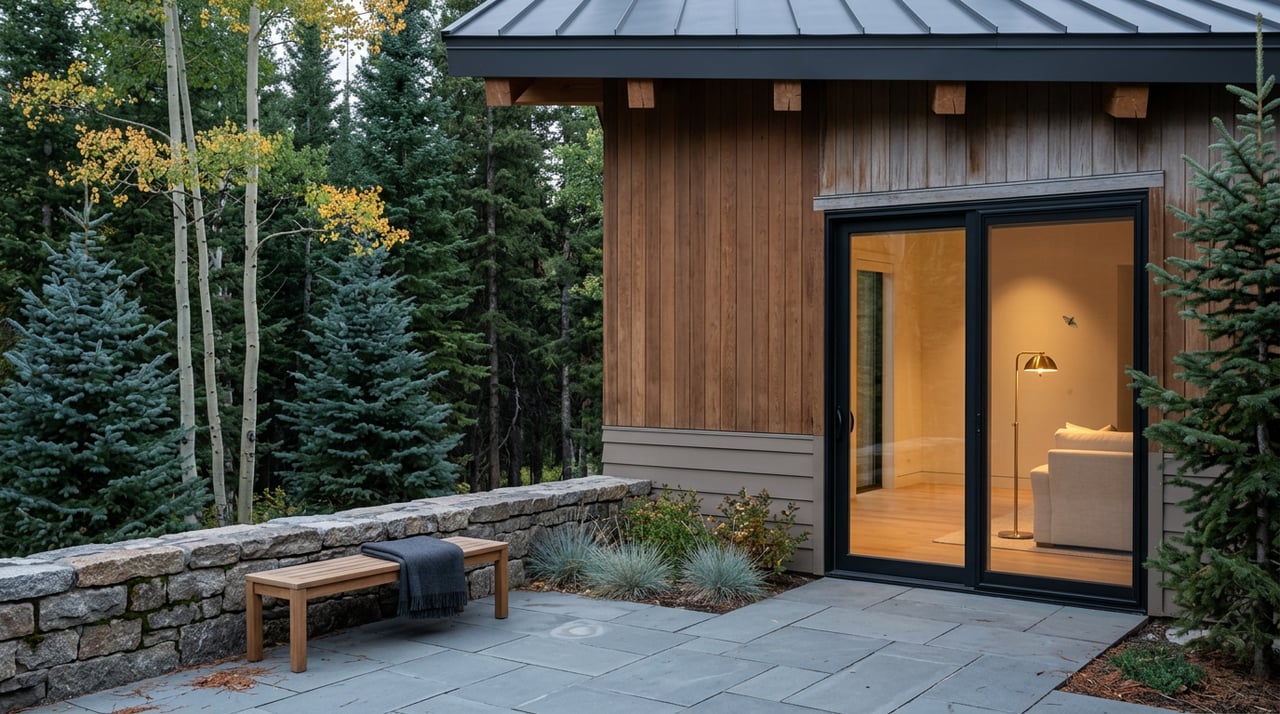
Specializing in upscale residences, condominiums, and ranches, Chris is a seasoned broker known for his professional approach. His success is driven by continuous client communication, continuous market trend analysis, and strategic identification of target markets.
Mid-cast Action Shot

Trophy Catch
Golden-hour canyon, no face needed.
Wide scenic, red-rock backdrop
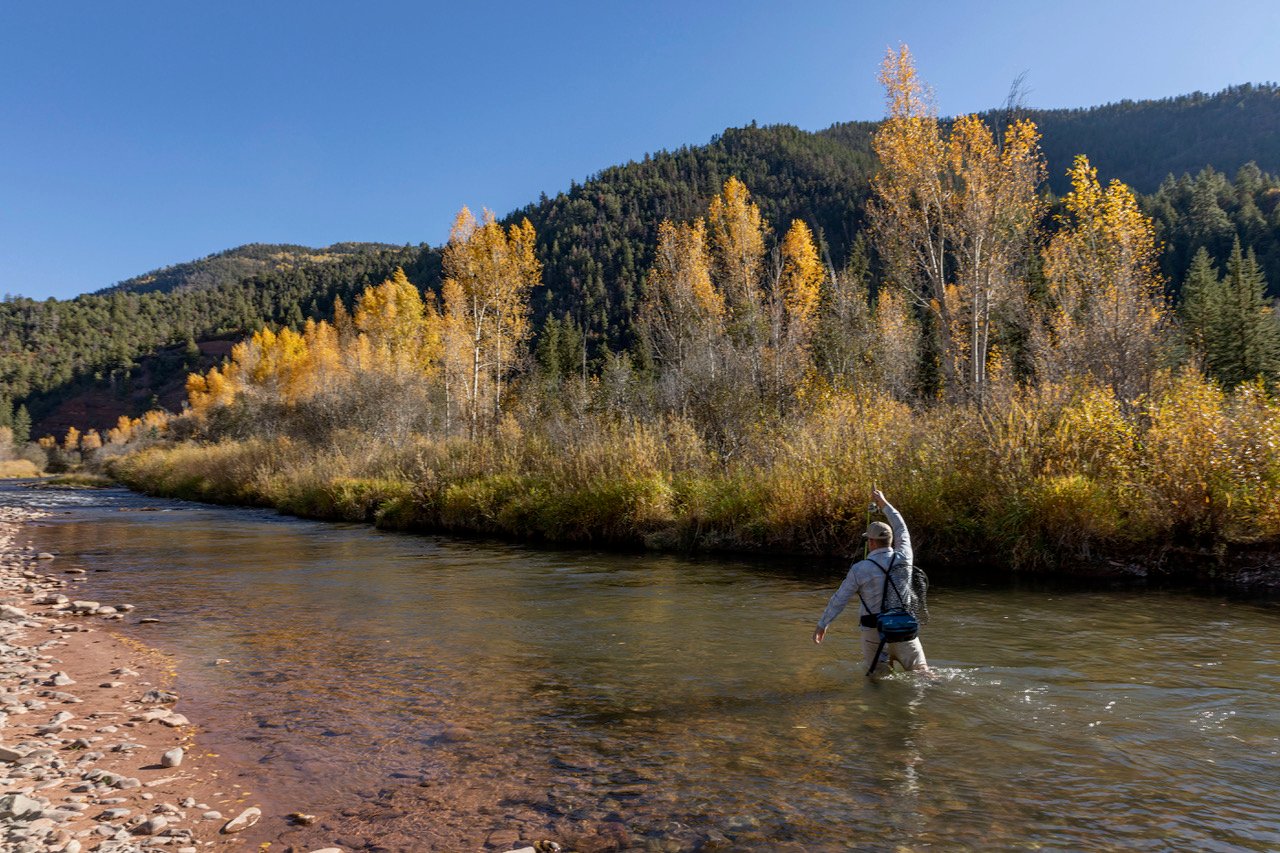
Dynamic hookset moment.