Explore Telluride Luxury Home Styles by Area
April 23, 2026
April 23, 2026
What makes a Telluride luxury home feel unmistakably Telluride? Often, it comes down to architecture. If you are weighing an in-town historic home against a newer Mountain Village retreat, understanding the design language of each area can help you narrow your search and make a smarter long-term decision. Let’s dive in.
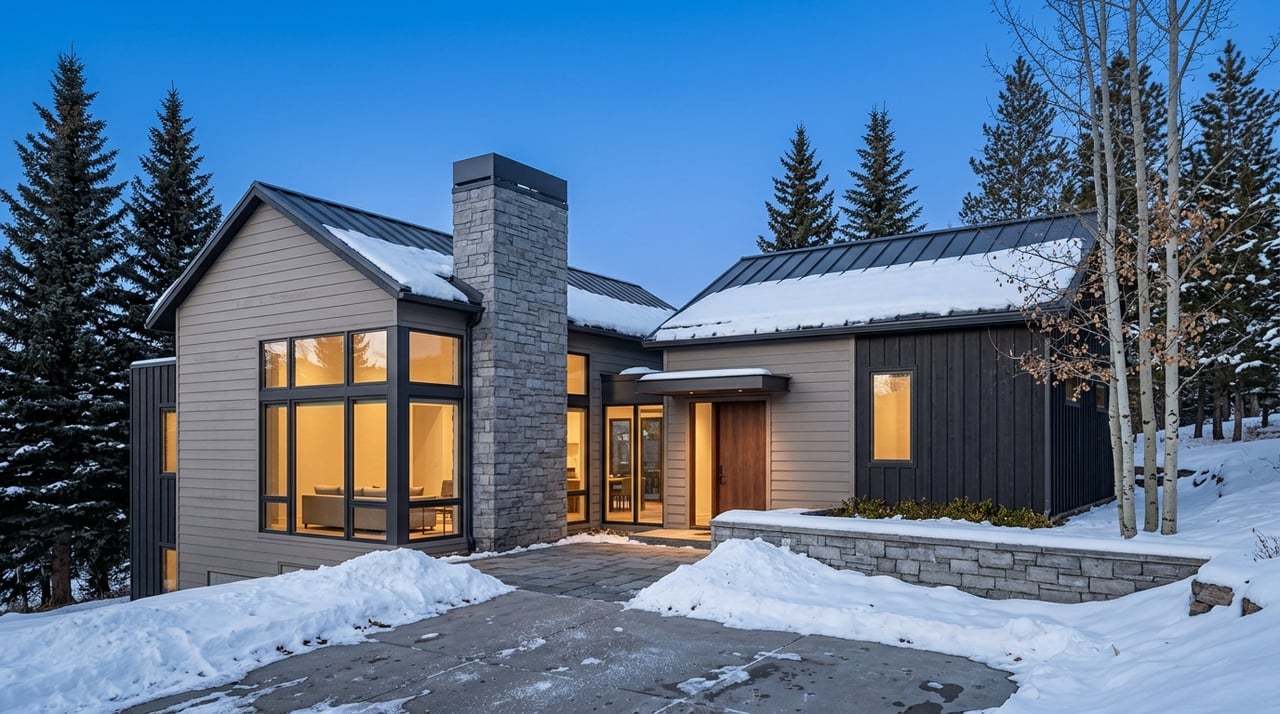
In the Telluride area, luxury architecture generally falls into two distinct categories. In the Town of Telluride, the visual identity is shaped by preservation, historic character, and a tightly protected built environment. In Mountain Village, the design direction is newer and more alpine, with architecture that responds to mountain weather, topography, and contemporary lifestyle preferences.
That contrast is grounded in local planning frameworks. The Town of Telluride’s history and preservation resources reflect the importance of its historic core, while Mountain Village planning materials show a design review process shaped by alpine architecture and evolving mountain vernacular.
The Town of Telluride was designated a National Historic Landmark District in 1961. According to the National Park Service nomination, the district includes hundreds of contributing buildings tied to the town’s mining-era development from 1878 to 1913.
For luxury buyers, that history matters. In-town prestige is often defined less by sheer square footage and more by how well a home preserves and reflects Telluride’s original architectural character.
Some of the most distinctly Telluride homes are the simpler wood-frame residences that give the historic core its rhythm and scale. The National Historic Landmark documentation describes these homes as modest in size, typically with front- or side-gabled roofs, steep pitches, overhanging eaves, and restrained ornament.
These homes are important because they represent the dominant residential language of historic Telluride. Even at the luxury end of the market, buyers are often drawn to thoughtful restorations that preserve this straightforward mining-town character rather than replace it.
Among Telluride’s more decorative historic homes, Queen Anne influences are some of the most recognizable. These properties often feature more elaborate rooflines, decorative trim, gable ornament, and asymmetrical forms, according to the NPS architectural record.
In practical terms, these homes can feel more visually expressive than a classic miner’s cottage. If you are looking for an in-town property with period detail and a stronger historic presence, this is one of the architectural styles worth watching.
Gothic Revival is less common in residential form, but it remains part of Telluride’s architectural story. The same National Park Service record notes the style’s vertical emphasis and ecclesiastical character, with St. Patrick’s Church identified as the town’s strongest example.
For buyers, the main takeaway is not that you will find many full Gothic Revival homes, but that verticality and period detailing do appear in the town’s historic fabric. Those details contribute to the layered character that makes in-town Telluride so distinctive.
One of the biggest surprises for some buyers is that historic luxury in Telluride is often about preservation quality, not mansion scale. The town’s Design Guidelines and Standards emphasize the simplicity and modest scale of historic buildings, and the local preservation program recognizes compatible restoration, infill, rehabilitation, and additions.
That means the highest-value homes in town are often the ones that handle updates with restraint. Instead of trying to make an older home look grander or more ornate than it was, successful projects usually work within the logic of the original structure.
Yes, you can remodel a historic Telluride home. But exterior changes to historic structures are reviewed by the Historic and Architectural Review Commission, or HARC, which must approve work before permits are issued for qualifying projects.
For you as a buyer or owner, that creates a different design process. You may have the chance to improve livability, expand thoughtfully, or restore original features, but the goal is compatibility with the home and its surroundings.
If historic Telluride is defined by preservation, Mountain Village is defined by alpine response. Planning materials from the town describe architecture and landscaping that should respond to the high-mountain environment while allowing a regionally unique mountain vernacular to evolve.
This is why so many newer luxury homes in the area read as alpine mountain, mountain modern, or contemporary mountain design. They are not trying to copy the historic core. They are shaped by climate, materials, site planning, and a more current architectural vocabulary.
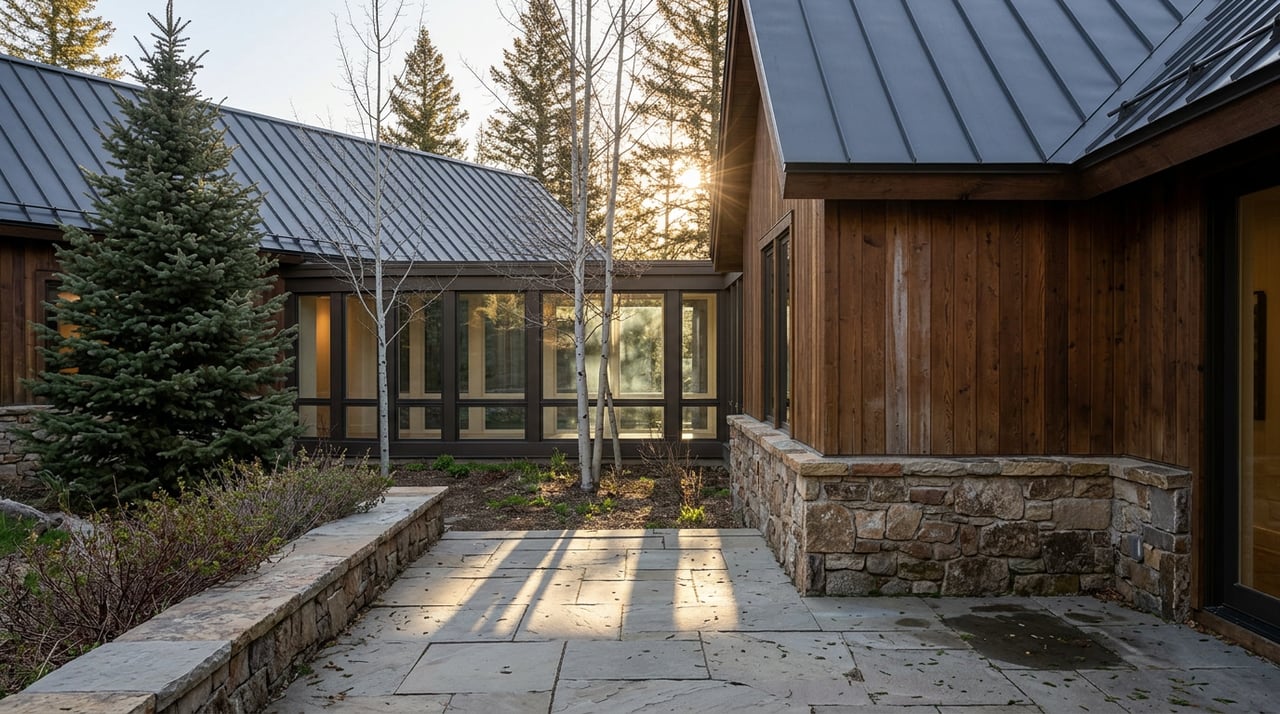
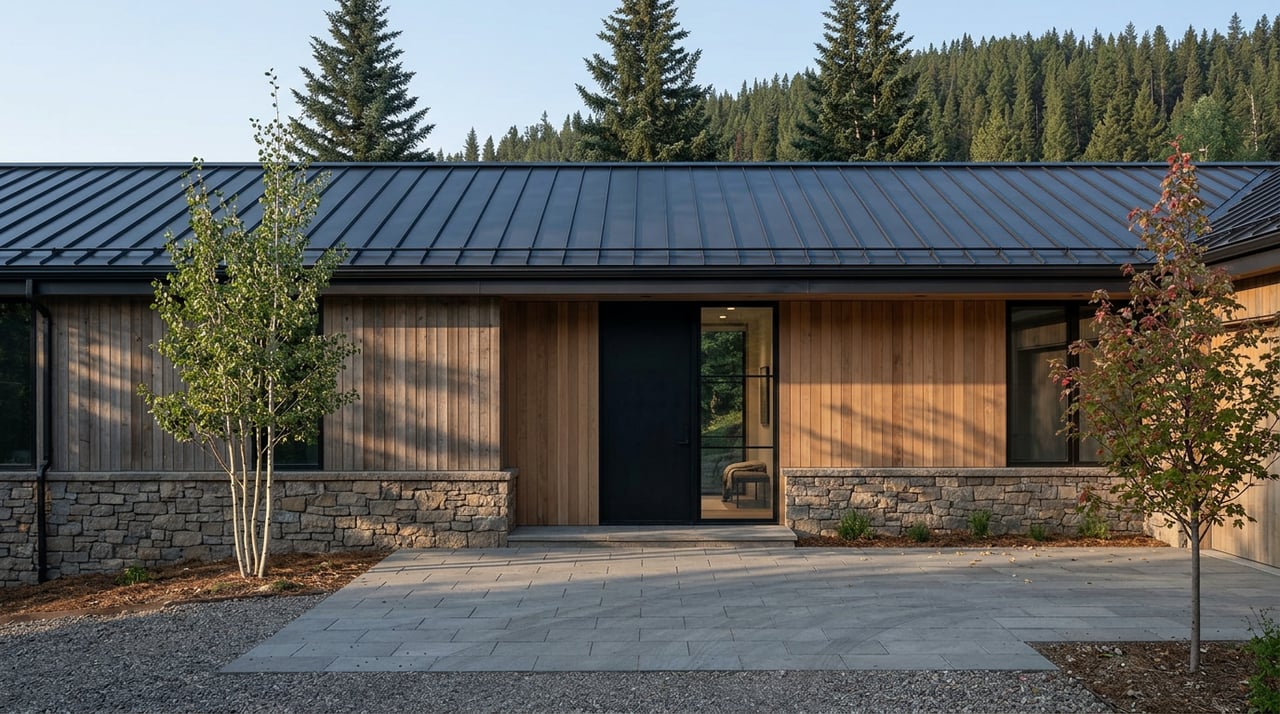
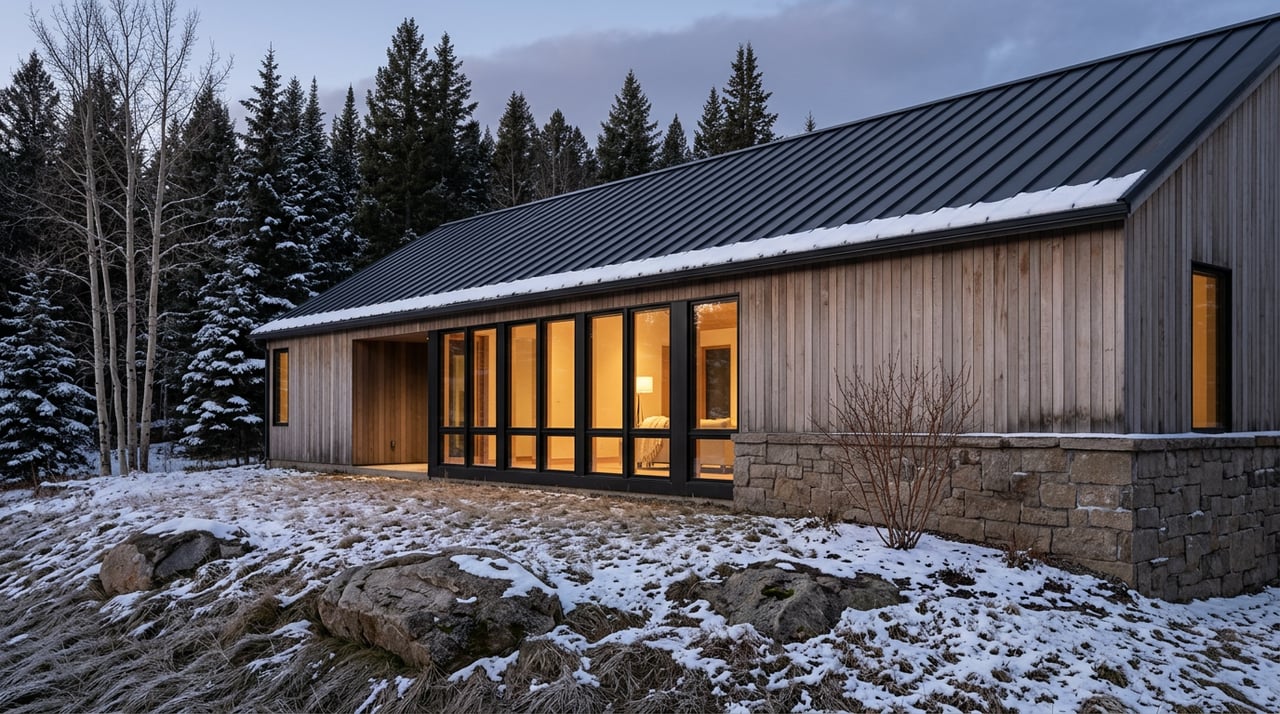
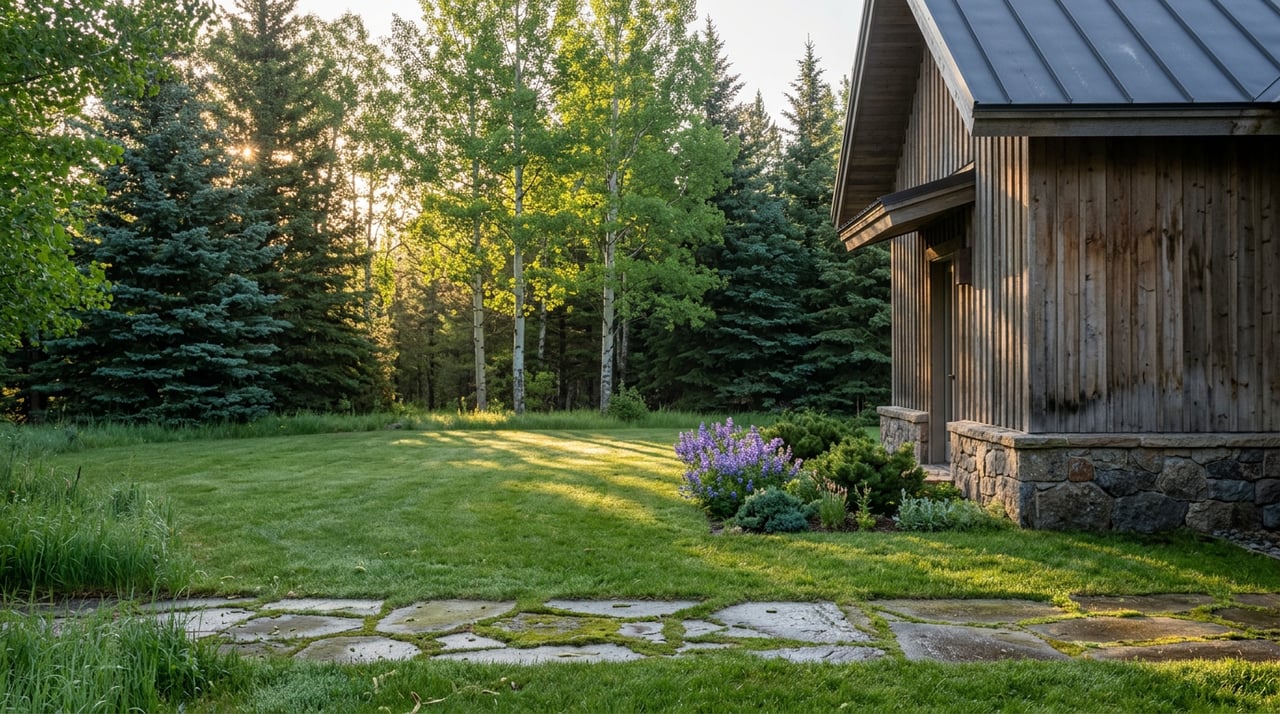
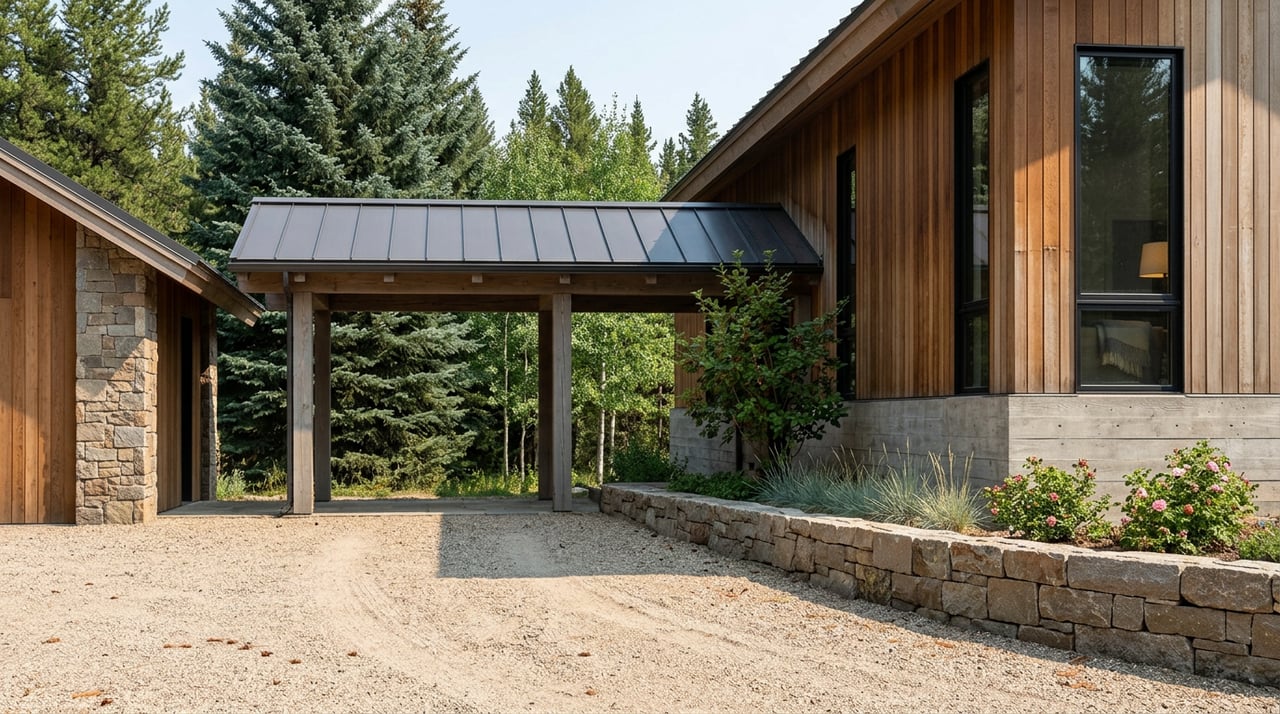
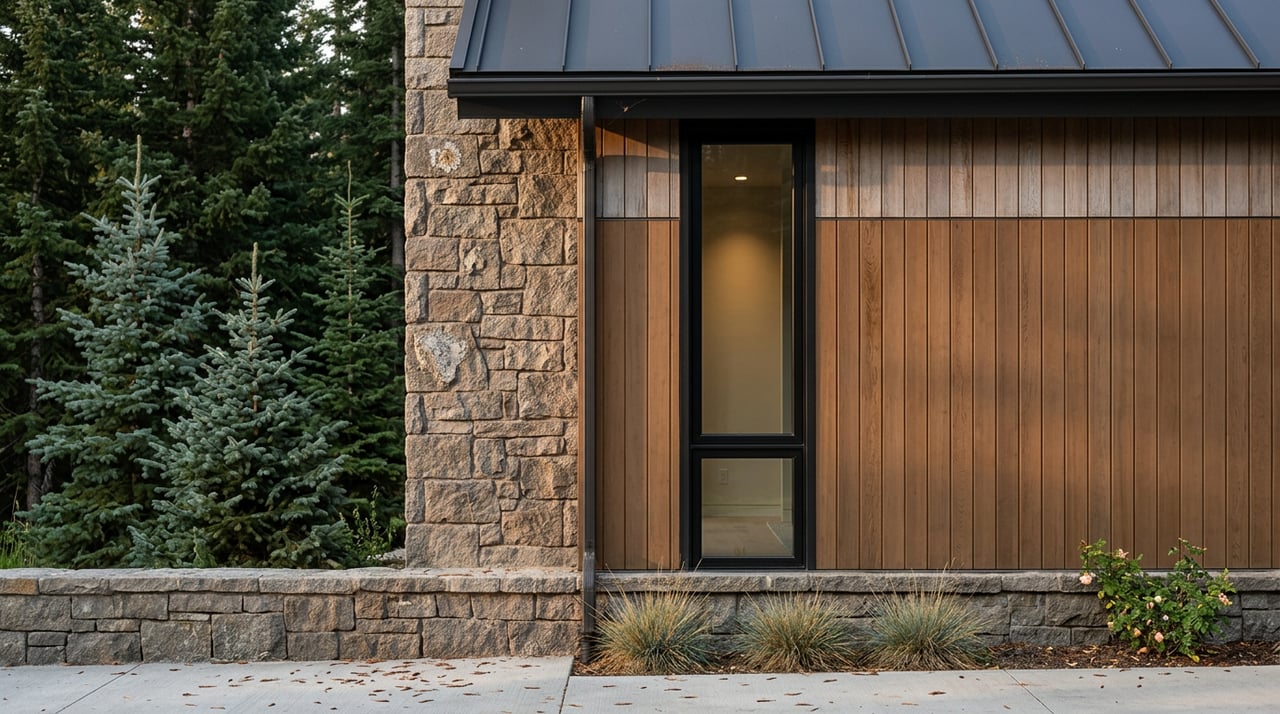
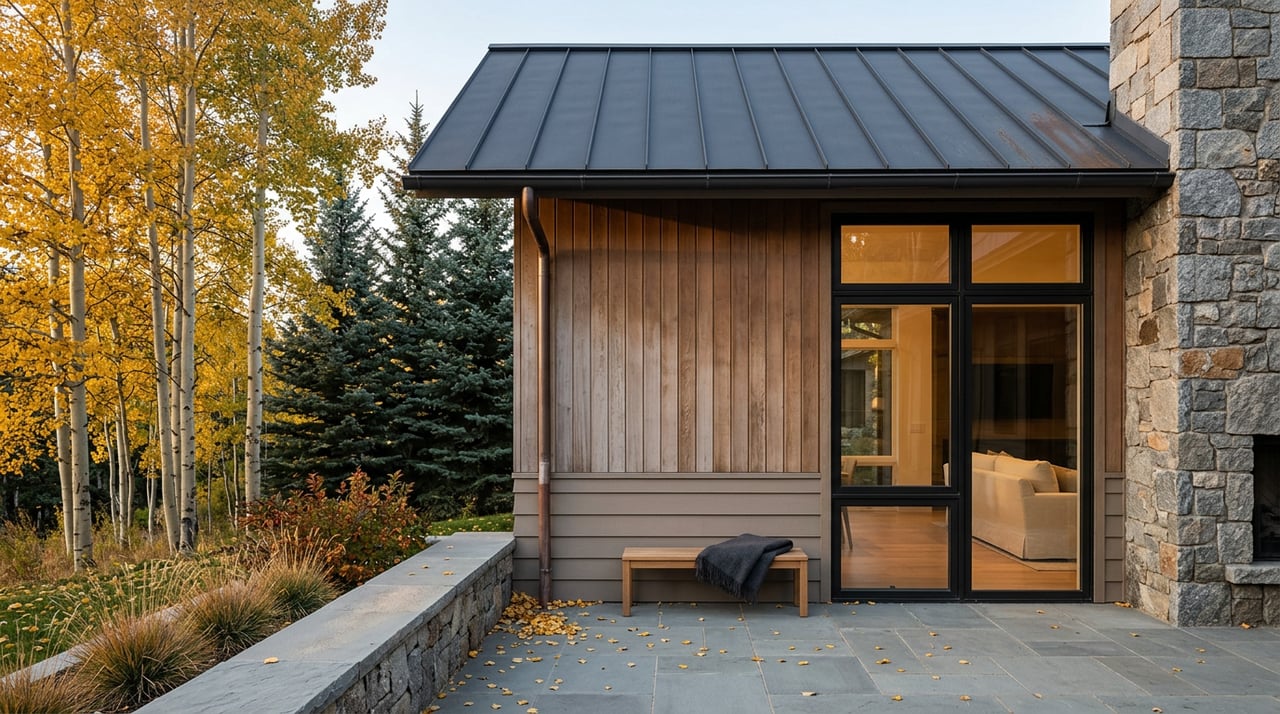
Mountain Village design review documents consistently point to materials and forms that fit the setting. Recent design review board packet materials describe homes with stone bases, wood siding, and black or gray standing-seam metal roofs.
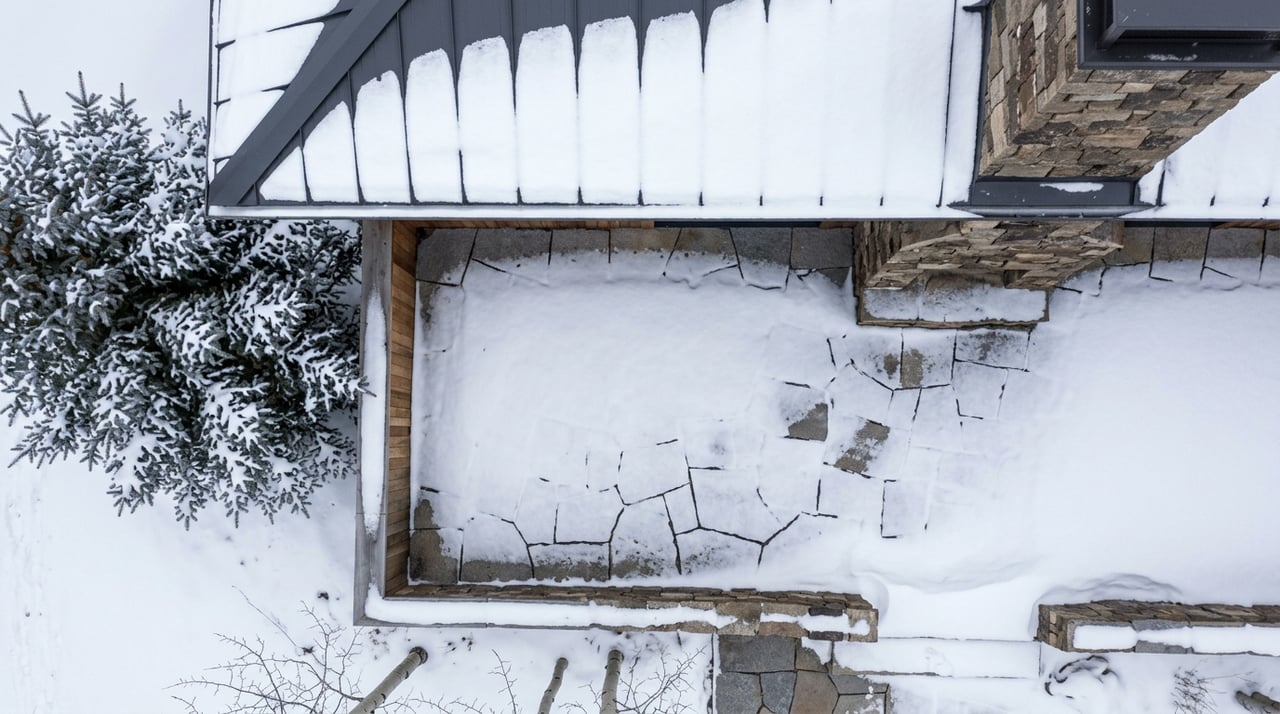
Roof forms are also important here. Gabled and shed roofs are commonly used in part because they help manage snow, wind, and heavy weather, which is a practical design concern at this elevation.
Many buyers are especially drawn to Mountain Village homes that feel cleaner and more contemporary. Recent review packet examples describe projects with simple massing, substantial glazing, and combinations of stone, wood, steel, and metal.
This style is often modern, but not urban-minimalist in the strict sense. It is still grounded in mountain conditions, with durable materials, strong roof geometry, and an exterior palette designed to sit naturally within an alpine setting.
Mountain Village homes are also shaped by environmental performance. The town requires a wildfire mitigation plan for new construction, and planning documents emphasize grounded building forms, subtle natural exterior colors, and material choices suited to high-alpine conditions.
For you, that often translates into a different ownership experience. A newer home may offer more flexibility in layout and style, but the design conversation still centers on snow management, durability, maintenance, and site-specific performance.
When you compare luxury homes in Telluride and Mountain Village, the architecture tells you a lot about how ownership may feel day to day. Here is a simple way to think about it:
| Area | Common Design Language | What Buyers Should Expect |
|---|---|---|
| Town of Telluride | Vernacular mining-town, Victorian-era, Queen Anne influences, select Gothic Revival details | Historic context, preservation review, character-driven updates |
| Mountain Village | Alpine mountain, mountain modern, contemporary mountain | More contemporary design, climate-responsive materials, design review focused on alpine fit |
If you want a home that feels rooted in Telluride’s original story, the town core offers that sense of continuity. If you prefer newer construction, expansive glazing, and a more contemporary mountain aesthetic, Mountain Village may align more closely with your goals.
If architecture matters to you, it helps to look beyond finishes and staging. In this market, the details that matter most often include:
These factors influence not just aesthetics, but also renovation options, long-term upkeep, and resale positioning.
In many markets, style is mostly a matter of taste. In Telluride and Mountain Village, style is also about context. Local design standards, historic preservation, weather, and terrain all shape what gets built and how homes evolve over time.
That is why buyers benefit from local guidance when comparing options. A restored in-town Victorian and a mountain modern home in Mountain Village may both be luxury properties, but they offer very different design experiences, ownership considerations, and paths for future improvements.
If you are weighing those options, a knowledgeable local perspective can help you understand not just what a home looks like today, but how it fits into the wider architectural fabric of the Telluride market. To schedule a private consultation, connect with Chris Sommers.
Stay up to date on the latest real estate trends.
Specializing in upscale residences, condominiums, and ranches, Chris is a seasoned broker known for his professional approach. His success is driven by continuous client communication, continuous market trend analysis, and strategic identification of target markets.

Mid-cast Action Shot

Trophy Catch
Golden-hour canyon, no face needed.
Wide scenic, red-rock backdrop
Dynamic hookset moment.