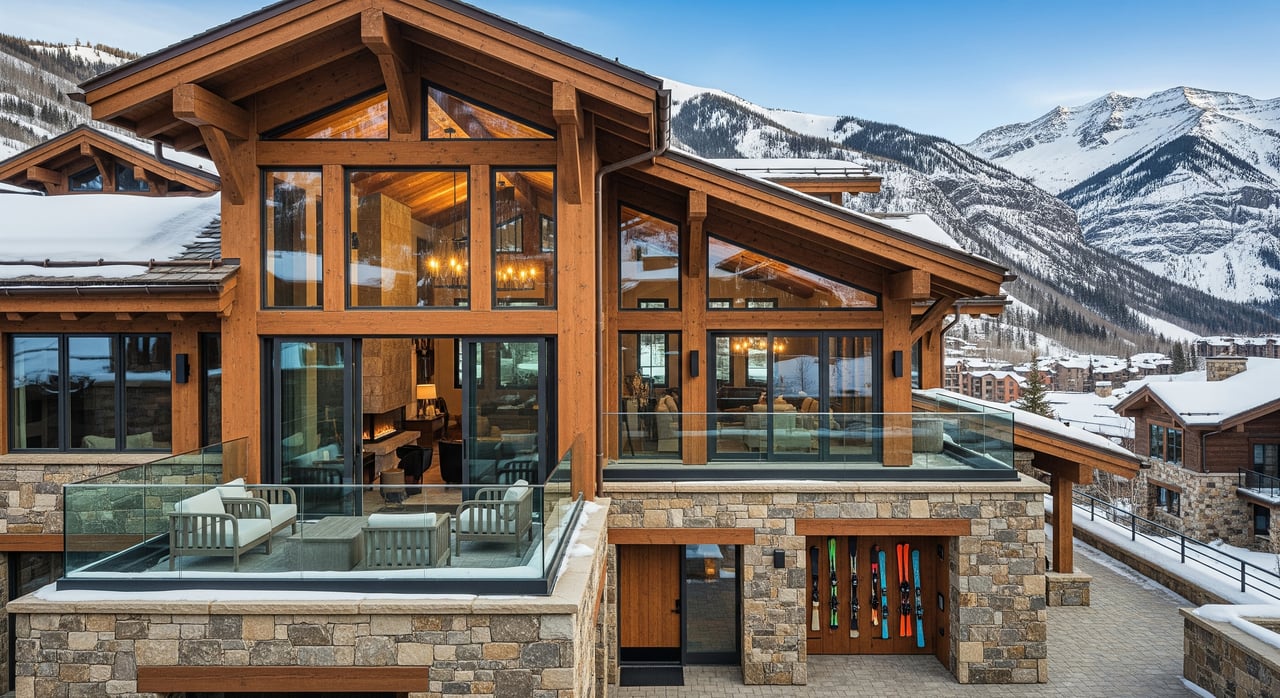
Mountain Village Condotel & Lock-Off Financing Guide
November 6, 2025
November 6, 2025
Considering a lock-off or condotel in Mountain Village but unsure how the financing works? You are not alone. These properties live at the intersection of hospitality and residential real estate, which means lenders take a closer look and set different terms. In this guide, you will learn how lenders classify these units, what documents they review, realistic down payment and timeline expectations, and how to prepare a strong offer in Telluride’s resort market. Let’s dive in.
A condotel is a condominium that participates in a hotel-style rental program with pooled or centrally managed nightly rentals and on-site services. A lock-off is a single legal condo that can be divided into two rentable components, such as a studio plus a one-bedroom, often with separate entrances.
Lenders treat both differently from a standard condo because nightly rentals and hotel-like operations introduce commercial characteristics. Appraisals are more complex and comparable sales can be limited, especially for lock-offs with unique layouts.
Most projects with active nightly rentals are classified as non-warrantable by many lenders. That means they may not qualify for standard agency financing and are often underwritten as special use or portfolio loans.
Fannie Mae and Freddie Mac typically require a condo project to be warrantable. Projects with substantial short-term rentals, centralized hotel operations, significant commercial space, or low owner occupancy often do not meet agency criteria. Even high-quality resort buildings can be excluded if they operate like a hotel.
Many Mountain Village purchases are jumbo in size. Some banks and mortgage companies offer portfolio programs specifically for resort markets. These lenders hold loans in-house, so they can be more flexible, but they usually require larger down payments, more reserves, and may price the loan higher than standard conventional financing.
Local and regional portfolio lenders are often the best fit for non-warrantable condotels and complex lock-offs. Expect lender-specific criteria that emphasize higher credit scores, larger reserves, and thorough project reviews.
Private lenders can move quickly and accommodate unique property features, but they charge higher interest rates and fees. These loans are typically short term and used as bridge or stopgap financing before refinancing into a longer-term mortgage later.
FHA and VA have stricter condo project requirements. Condotels and projects with significant short-term rental activity are commonly ineligible under these programs.
You will provide a standard mortgage package: government ID, recent pay stubs or business financials if self-employed, two years of federal tax returns, 1099s or W-2s, and recent bank and investment statements. For resort and jumbo loans, lenders often ask for proof of additional liquid reserves measured in months of payment coverage.
Expect a detailed condo project review. Lenders commonly request the HOA budget and reserves, master insurance details, bylaws and rental rules, completed condo questionnaires, estoppel letters, collection history and delinquency rates, meeting minutes if assessments or litigation exist, and any rental program agreements. They also look for proof of compliance with local short-term rental licensing and occupancy tax registration.
Appraisers experienced in resort markets may blend sales comparisons with an income approach, especially for condotels and unique lock-offs. For lock-offs, appraisers sometimes value the unit as a whole and consider the income potential of separate components. Seasonality, vacancy, and management stability are part of the analysis.
Lenders focus on owner-occupancy ratios, the percentage of units in rental programs, concentration risk if a single owner holds many units, the amount of commercial space, insurance adequacy, and any litigation. If you plan to qualify using rental income, lenders may use debt-service coverage analysis.
You should plan for larger down payments compared to a standard condo. For second homes in acceptable projects, 10 to 20 percent down may be possible in limited cases, but in resort and jumbo scenarios 15 to 25 percent is common. For condotels, non-warrantable projects, or investment use, 20 to 35 percent or more is typical, and many lenders want 25 to 30 percent down.
Rates are usually higher than standard conforming loans. Expect a premium of about 0.25 to 1.5 percentage points or more depending on the lender and the project profile. Portfolio and private loans often include higher origination fees and may include prepayment penalties.
Reserves matter. For non-warrantable, jumbo, and condotel loans, lenders commonly require 6 to 12 months of PITI in liquid reserves after closing. Higher purchase prices can push this higher.
Timelines can stretch. A warrantable condo purchase might close in 30 to 45 days. Non-warrantable condotel or lock-off financing often takes 45 to 90 days or more due to project due diligence, complex appraisals, and credit committee reviews. Private lenders can close in 7 to 21 days, but at a higher cost.
These factors influence underwriting and appraisal, and they can affect your operating assumptions after closing.
Financing in Mountain Village is doable, but it rewards preparation and local knowledge. You get the best outcomes when your broker, lender, appraiser, and HOA contacts are aligned from day one. With deep experience in high-value Telluride condos, lock-offs, and condotels, Chris Sommers can coordinate documents, anticipate lender questions, and help you structure a clean, competitive offer.
Ready to explore opportunities or pressure-test a specific building’s financing path? Schedule a private consultation with Chris Sommers to plan your next step with confidence.
Stay up to date on the latest real estate trends.

Specializing in upscale residences, condominiums, and ranches, Chris is a seasoned broker known for his professional approach. His success is driven by continuous client communication, continuous market trend analysis, and strategic identification of target markets.

Mid-cast Action Shot

Trophy Catch
Golden-hour canyon, no face needed.

Wide scenic, red-rock backdrop

Dynamic hookset moment.